What To Do When You’re Raped: An ABC Handbook for Native Girls

813

Graphic Art from What To Do When You’re Raped: An ABC Guide for Native Girls 

“‘What do I tell my daughter when she is raped?’

This was the question posed to Charon Asetoyer, CEO of the Native American Women’s Health Education Resource Center by a young mother on the Yankton Sioux Reservation in Lake Andes, South Dakota.

“The feeling … I can’t even begin to explain how that made me feel. Not if she’s raped, but when she’s raped,” said Asetoyer of the Comanche tribe. “We’re aware of how bad the problem is in our reservation community, but when somebody puts it to you that way, you realize it’s even worse than you thought it was.”

Asetoyer is well aware that Native American women are 2.5 times more likely to experience sexual assault crimes than all other races in the US and that more than one in three Native American women report having been raped during their lifetime. She speaks with survivors of sexual assault in her community every day.

Recognizing an immediate need to prepare and support indigenous young women in the likely event of a sexual assault, Asetoyer and her colleagues teamed up with graphic designer Lucy M Bonner to create a graphic novel entitled, “What To Do When You’re Raped: An ABC Handbook for Native Girls”. The book is available to download free online or to order in print.”

Read the full article for The Guardian here

If this story moves you, Charon Asetoyer and Pamela Kingfisher say there are many ways you can help. Call your local government representatives and tell them this is unacceptable. Buy Plan B in bulk and donate it to your local Native American community. Donate to the Native American Women’s Health Education Resource Center and women’s shelter here.

The Mormon Feminists Fighting for Women’s Right to Join the Priesthood

“Kristine Stolakis’s new documentary, “Where We Stand,” follows a stay-at-home mom turned vocal feminist advocate, as she navigates the repercussions of her unpopular activism in her predominantly Mormon suburb.

Click here to support “Where We Stand”

“Kristine Stolakis is a San Francisco-based documentary filmmaker who wants to make the world a better place. In a culture saturated with irony, Stolakis is a refreshing wellspring of sincerity; there is nothing cynical about her work. Before embarking on a graduate degree in documentary film at Stanford, she studied cultural anthropology at NYU and worked as a teaching artist and program manager for youth in underserved communities.

This commitment to social change flows through all of her films. Her short documentary Balancing Act explores the exploited tradition of West African hambone dance through the story of a young circus performer in West Oakland. InThe Typist, Stolakis takes on discrimination against LGBTQ service members through the story of a Korean War veteran tasked with writing dishonorable discharges. Her subjects are fascinating, her films rife with thoughtful conviction.

Her latest, Where We Stand, is the story of a controversial group of Mormon feminists fighting for women’s ordination in The Church of Jesus Christ of Latter-Day Saints. The documentary follows Abby Hansen, a stay-at-home mom turned vocal advocate for Ordain Women, as she navigates the repercussions of her unpopular activism against her church in her predominantly Mormon suburb. Stolakis is currently running an Indiegogo campaign to raise completion and distribution funds. The full film will premiere in film festivals this winter.

Broadly caught up with Stolakis on backyard activism, empathetic filmmaking and finding feminism outside of our worldly existence.”


Feminist Art Historian Olesya Turkina on Russia’s Fleet of Canine Cosmonauts

soviet-space-dogs-1455897629

Image Courtesy of FUEL Publishing

“In the aftermath of World War II, the USSR and the USA became locked in an ideological conflict between socialism and capitalism. Determined to demonstrate the superiority of the socialist way, the USSR launched a secret space program. Eventually a human cosmonaut would fly into outer space, but first came Laika—a dog.

Laika’s launch was kept a secret until a few days before take-off. As Russian feminist art historian Olesya Turkina explains in her book, Soviet Space Dogs, “the secrecy of the space program was justified by the notion that socialism could not be seen to fail in any of its endeavors. In this sense, space travel was the most imperative achievement of such a society.” According to the official Soviet story, the valiant little mutt launched into orbit, died a heroic death, and became the first icon of space exploration.”

Thank you to Olesya and Damon for taking the time to answer my questions and for creating such a special book. Check out FUEL Publishing’s “Soviet Space Dogs” by Olesya Turkina, published by Damon Murray and Stephen Sorrell.

READ THE FULL STORY HERE

Mother Nature


Photo: Sydney Parker

Photo: Sydney Parker

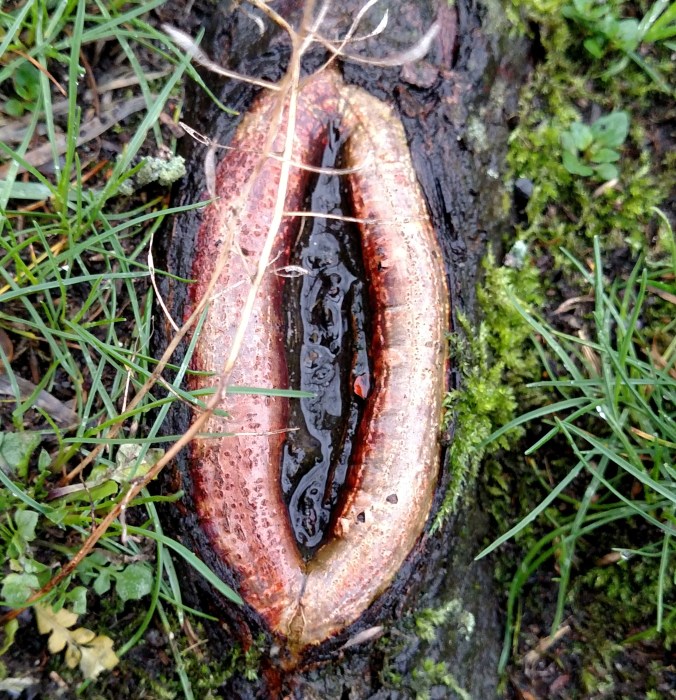
“…to speak of them out loud, to speak of their hunger and pain and loneliness and humor, to make them visible so that can not be ravaged in the dark without great consequence.”― Eve Ensler, The Vagina Monologues

IMG_20160529_175455

Photo: Sydney Parker

“Now, should we treat women as independent agents, responsible for themselves? Of course. But being responsible has nothing to do with being raped. Women don’t get raped because they were drinking or took drugs. Women do not get raped because they weren’t careful enough. Women get raped because someone raped them.” – Jessica Valenti, The Purity Myth

IMG_20160620_205020

Photo: Sydney Parker

“Volumes upon volumes on exploration, war, violence, the life-threatening transformative journeys of man. But you can’t talk about this. The fucking, the sadness, the dark, the blood, the light. They will burn you at the fucking stake for this shit.”― Elisa Albert, After Birth

The Faces Behind the Names of Five Seattle Streets

“Every street in Seattle has its own story. All are fascinating, most weird, some — tragic. Here are the the faces and brief histories behind five notable Seattle streets.”

seattle-streets-3

Kikisoblu aka “Princess Angeline”. Photo: Seattle Public Library


READ THE FULL STORY HERE

This little story only scratches the SURFACE of the fascinating history behind Seattle streets. If this peaks your interest please seek out a more in-depth look through HistoryLinkDuwamish Longhouse and Cultural Center, and Wedgwood in Seattle.

Milking It: A Brief History of the Dairy Princess


Wisconsin Historical Society. Image ID 56988

Photo Courtesy of Wisconsin Historical Society. Image ID56988

“Once upon a time in the magical land of Enumclaw, Washington, there lived a beautiful Dairy Princess named Kimmi Devaney. Princess Kimmi had an encyclopedic knowledge of dairy science and spoke eloquently on the topic in public. Her loyal subjects (fairies, elves, even trolls!) followed her adventures on Kimmi’s Dairyland, a dairy-centric lifestyle blog. All dimples and charm, Princess Kimmi could just as dreamily gush about her collection of sparkly belt buckles and embroidered cowboy boots as she could break down the physics of the milking machine or nonchalantly describe how to artificially inseminate a cow.”

Thank you to Kimmi Devaney, the Wisconsin Historical Society, and the Alice in Dairyland Program for sharing your stories and photos for this article. Excited to share my latest for Racked!

READ THE FULL STORY HERE

The Odd History of the Amazing Seattle Public Library

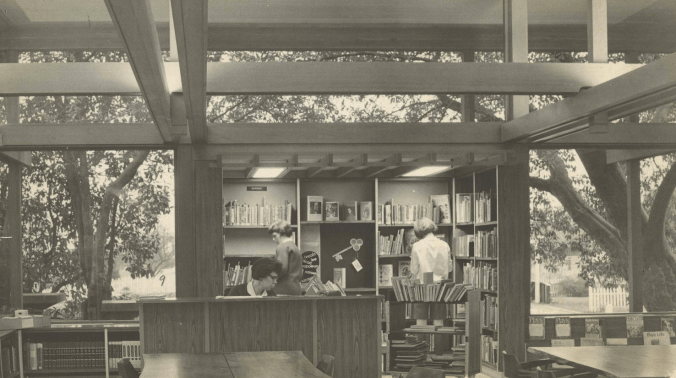
“Rain, coffee, cat ladies, and a robust literary arts community make Seattle one of the best cities in the world to curl up with a book. Seattle’s bookish heritage extends all the way back to the city’s earliest beginnings. Houses were built, a few buildings, a lumber mill, and then — libraries. Stunning, glorious, introvert-friendly libraries.

seattle-library-15

Photo: Seattle Historical Photograph Collection/SPL

After two decades of book nerd community rabble-rousing, the first Seattle public library opened in 1891 on the fifth floor of the Occidental Building in Pioneer Square. According to Seattle Public Library lore, a lumber company vice-president checked out the first book, a brand new copy of Mark Twain’s Innocents Abroad…” 

I LOVED learning about the Seattle Public Library. Read all about it and see some more great photos by clicking HERE.

18 Retro Scenes of Seattle in the 1960s

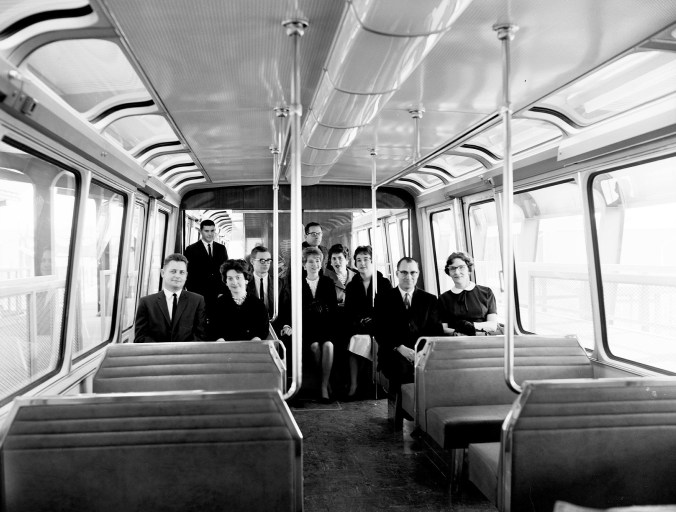
“Seattle was a gas in the 1960s. The Century 21 Exposition, also known as the Seattle World’s Fair, was held in 1962 and drew almost 10 million visitors from around the globe. The space exploration-theme of the fair inspired major construction projects including the Space Needle and Alweg monorail, as well as several sports venues (Washington State Coliseum, now KeyArena), performing arts buildings (the Playhouse, now the Cornish Playhouse), and the Pacific Science Center.”

Learn more and check out awesome vintage photos from the archives here.

Seattle Monorail 1960s

Passengers on Seattle Monorail, 1962. Photo: Seattle Municipal Archives

18 Signs Your Dog Has A Secret Second Family

Secret Second Family

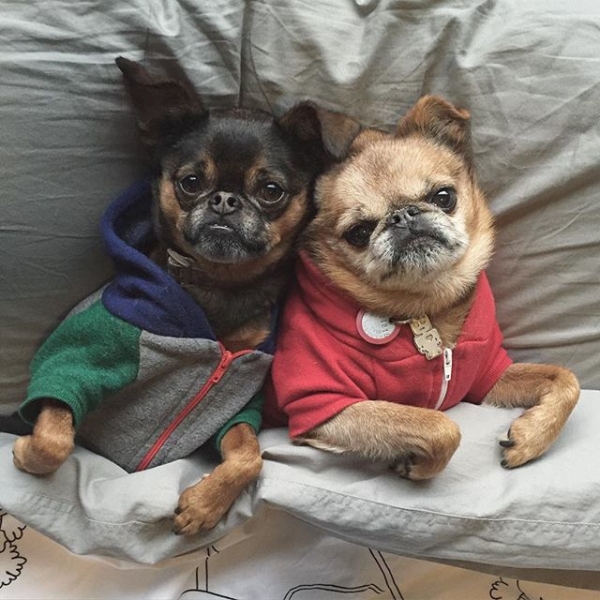
“Your dog has always been your rock. Your light in the dark. Your Snickerbottom. Pumpkinbooger. Snugglebear. But what if you’ve been wrong all this time? What if your Honey-munchkin has been playing you for a fool while sleeping in someone else’s dog bed? Eating someone else’s treats? Dare we imagine Piggle-wiggle barking in someone else’s face and urinating on someone else’s floor? What if the dog you’ve cuddled with and cleaned up after all these years isn’t the Jellymuppet you thought he/she was? If you’ve ever suspected that your dog was offering tongue baths and meaningful eye contact elsewhere, read on for signs your dog has a secret second family.”

Such a fun one for BarkPost. Read the rest here!

Meet the Woolies

“Woven tightly into the social fabric of the internet resides a cozy community of people who get off on wool. Sexually. In fact, you might say that the wooly world is one of the greatest achievements of the internet. Where else can a person — separated by borders of nation, language, religion, and culture — find others who are sexually aroused by the sight of a mohair sweater? By cable scarf bondage? By the singular sensation of a warm mitten on the genitals? Only online, of course.”

Had a warm and fuzzy good time writing this article for Racked. This material was particularly well received by my mother’s knitting circle. Delight in the full Woolie experience here.

Extravagantza

Created by Extravagantza

Below, please find additional photos of a Woolie playroom generously shared with me by Margot and Rob, a Woolie couple featured in the article. For more context on these images, please read the article.

This slideshow requires JavaScript.