Autism: Does ABA therapy open society’s doors to children, or impose conformity?

 A man reaches out to his son, who has autism, in Portland, Oregon. Photograph: Stephen Voss / Alamy/Alamy

A man reaches out to his son, who has autism, in Portland, Oregon.           Photograph: Stephen Voss / Alamy/Alamy

I’m very excited to share this article on ABA therapy for Autism that I wrote for The Guardian. I hope this piece starts a dialogue about autism that goes beyond the vaccines debate and inspires others to seek out diverse autistic perspectives. You can read the full article here. For more information directly from the Autistic Blogosphere, please explore the following links:

Mo Welch on Larry Bird, Qweirdos, and Laughter in the Dark

Mo Welch Basketball

Photo credit: Mandee Johnson

“Whether she’s hosting The Mo Show, performing standup, making music videos, drawing her hilariously depressing cartoon, Barely Blair, or bringing her A-game on the basketball court onto the stage for the Larry Bird Variety Hour, the impossibly cool Mo Welch is constantly stretching the boundaries of her comedy and devising new ways to find the funny.

I got a chance to talk with Mo about the antics behind the making of her CBS sports special, Foul Ball, what it’s like to be Larry Bird, getting her start with The Grawlix, joining the Qweirdo community, and her unexpected moment of brilliance with a Pop-Tart.”

READ THE FULL INTERVIEW ON VULTURE

Bainbridge Island

Bainbridge Island

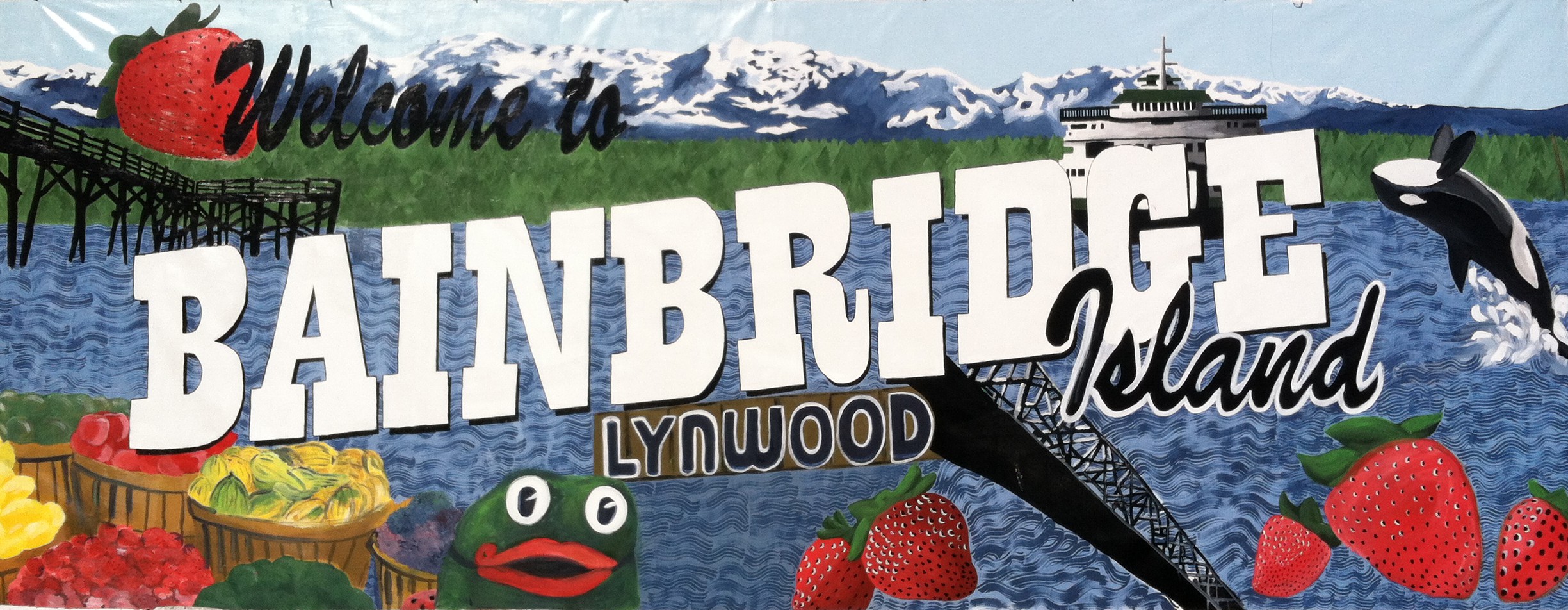
Bainbridge Island is everyone’s favorite part of Kitsap County, Washington. In the written epilogue of the 1996 hit movie, That Thing You Do! Guy Patterson and Fay move to Bainbridge Island, have four children and found a music conservatory where Patterson teaches jazz composition. Tom Hanks wrote and directed the movie, so I can only assume that his harrowing performance in Cast Away was inspired by his time on Bainbridge Island.

You must travel to Bainbridge Island by Ferry. The ferry is very safe, but if you would like to stand on the bow and pretend its the Titanic, the nice citizens of Seattle will just smile politely and walk around you. The ferry is so safe, it’s laughable.

View from the Ferry

View from the Ferry

Once you arrive on the island, artisan handicrafts and farm-to-table restaurants will overwhelm your senses. Portland has nothing on Bainbridge Island. It just doesn’t get any more homegrown local than Bainbridge.

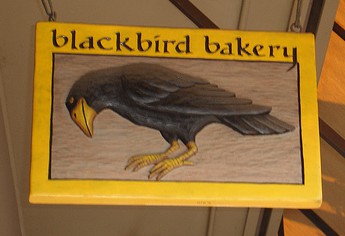
In the mood for a pastry? Inhale a fluffy orange sweet roll with a buttery orange filling and sweet orange glaze from Blackbird Bakery.

blackbird bakery

Not hungry, but in the mood to learn about Japanese Interment camps in Washington State? Stop by The Bainbridge Island Historical Museum.bainbridge-island-historical

If you want to fit in with the locals, you’ll really need to ramp up your outerwear style. Head on over to The Wildernest and pick up some Mountain Khakis.

IMG_1949

Locals in Bainbridge care about their look and will go to great lengths to maintain it. One local lost an item of clothing and posted a flier all over town to reclaim her beloved accessory:

IMG_1950

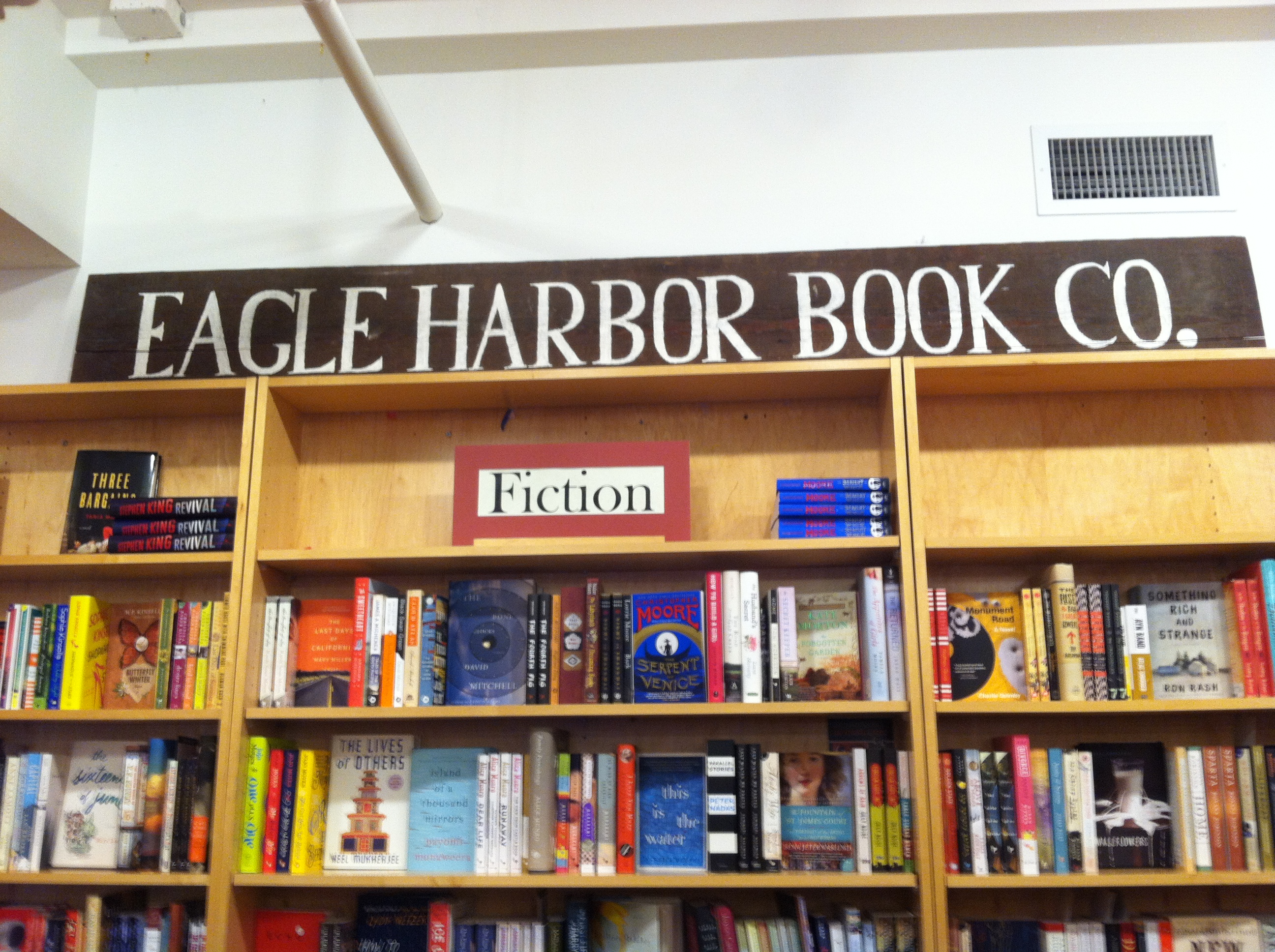
The Eagle Harbor Book Company has an incredible selection and atmosphere. They also have a large section featuring local authors including Jack Olson, Susan Wiggs and David Guterson who wrote Snow Falling on Cedars.

IMG_1948

Other famous Bainbridge Islanders include actor Chris Kattan, adult film star Tori Black and Jon Brower Minnoch, the heaviest man recorded in history.

If you want to spice things up, head over to one of the many kitchen stores and pick up some of Chef Marla’s Yiddish “Shit-arein” spices, which translated means, “to throw a little of this and a little of that.” They come in Dipshit, Horseshit, Shootin the Shit, Chicken Shit and Super Shit.

IMG_1954

Bainbridge Island is a wonderful adventure for all ages. With beaches, parks, hiking, shopping and artisan goods galore, it is a special place in our world not to be missed. Although it is surrounded by water, boasts a median household income of $91,280 and 92.88% of it’s residents are white, Bainbridge likes to think of itself as a lady on the streets but a freak in the sheets.

IMG_1953

Behold the wonder for yourself. On Bainbridge Isle.

Interview: Genetic Counselor Christina Ikard

Christina IkardThe lovely and brilliant Christina Ikard is a genetic counselor in Boise, Idaho specializing in hereditary cancer and a spectacular friend. She has an exceptional sense of humor in spite of the emotionally challenging situations she is confronted with daily, and an admirable strength of character. Her only downfall is that she won’t let me flay her skin and crawl inside her body so I can pretend to be her, but other than that slight personality quirk, she’s a dream. She very kindly answered my uncomfortable questions over e-mail while balancing a full time job. The baby pictured above is not hers, it’s just a photo I creepily stole from her Facebook profile without her permission. Without further ado, Christina Ikard ladies and gentlemen.

SP: Many people don’t know what a genetic counselor does. How would you describe your work? 

CI: Genetic counselors are healthcare professionals with unique specialized graduate degrees and experience in the areas of both medical genetics and counseling. Genetic counselors work as members of a healthcare team, providing risk assessment, education and support to individuals and families at risk for, or diagnosed with, a variety of inherited conditions. Genetic counselors also interpret genetic testing, provide supportive counseling, and serve as patient advocates.

So that is the technical definition, but I think of my role as someone who interprets family histories of cancer and determines whether or not genetic testing for a hereditary form of cancer is indicated. If it is, I help the patient and the family through the process, making sure to interpret the results for the family so that it is useable information.

Genetic counselors work in almost all the areas of medicine, but I specialize in hereditary cancer.

SP: What is the weirdest thing you’ve ever encountered in your field? 

CI: These hereditary cancer syndromes that I work with are pretty rare, with the most common syndrome occurring in about 1 in 500 people, is higher in some specific populations. I had a family who had two different hereditary cancer syndromes, which was pretty unusual and definitely kept me from never saying never.

SP: What’s your favorite part about your job? 

I love being able to talk to people all day long and being able to provide comfort and education on a daily basis. I always wanted to be in the medical field, but I didn’t want to have to deal with blood or other bodily functions. This way I am able to be in the constantly changing and exciting field of genetics and I am just able to converse with people all day long.

SP: What does a typical day look like for you? Starting with breakfast and ending with sleep. 

CI: I usually get up 30 minutes later than I am always intending to and then I quickly put bread in the toaster and start the coffee maker. Then I rush through getting ready, get myself out the door, and drive to work while eating my breakfast. One of the great things about Boise is no traffic, so I have a less than 5 minute commute to work. I usually start the day at 8 or 8:30 with emails and phone calls and then see the patients that are on my schedule. At the end of the day I catch up on my documentation and phone calls. I usually leave work around 4 or 4:30 and act like I am going to go to the gym, but that only happens about 50% of the time. After the sometimes gym time, I make dinner, eat, watch way too much trashy TV and then go to bed. I try and read for about 5 or 10 minutes before I go to bed or I play candy crush (yes I am still playing that game).

SP: Why did you want to become a genetic counselor? 

I wanted to be in the field of genetics ever since I was in middle school and we started to learn about genetics in school. I was fascinated with families and how we are all connected and why some families have some traits and other families have others.

I then thought I wanted to go to Medical school, but I shadowed a few doctors and realized that they only get maybe 15 minutes with each patient, they have to deal with some crazy bodily functions, and they have to go to school for at least 4 years.

I first heard of genetic counseling when I was in high school and was shadowing a doctor that specializes in genetics, called a geneticist. I loved how they were able to form real relationships with their patients, while still learning about these very interesting genetic disorders and being in the field of genetics. Then, I found out that it was only a master’s degree and I was sold.

SP: Where did you grow up and what was it like? What does your family think about your career choice? 

I grew up in Littleton, Colorado and I was the oldest of 4 children. I think I had a really good childhood overall as my parents always provided us with the strength to go out into the world and accomplish what we wanted. As a testament to that statement, I went to New York City for college, while my siblings went to Seattle, Boston, and Los Angeles. It seems that all of us had a stable foundation to go out and tackle the world, even if it meant leaving home.

My family is pretty close knit, even though we live apart from each other. Obviously genetics and families go hand and hand so I was always curious with different family dynamics and why each family is so unique. I work with families on a daily basis and it never seems that any family is the same.

I think my family is happy with my career choice. It is hard to know what a genetic counselor is until you go through a full session with one so I am not entirely sure if they know exactly what I do, but I know that they are happy to tell others what my title is to other people. I guess I have never really asked them directly to really know how they feel.

SP: What do you think is the future of genetic counseling? 

Pretty soon we will be able to sequence the entire genetic code for each person so I think that our role will be to help other health care providers and patients interpret what each of their individual codes mean for disease and health risk. Eventually we will all be practicing personalized medicine based on a person’s genetic makeup and our job will be to help with this transition.

SP: What is the most controversial issue in your field right now? 

As I practice hereditary cancer, I do not have to deal with it, but genetic counselors in other specialties have to combat the abortion question. Some people view our jobs as wanting to prevent the birth of any child with a genetic disease. I believe it is quite the opposite in that we empower people to have the knowledge regarding the risk for genetic disease in their families and allow them to make their own choices about their families. We provide information about all options and empower patients to make the right choice for them, which is a very powerful thing.

SP: Are there any misconceptions about genetic counseling that you’d like to clear up here? 

There is also the misconception that we have the ability to reach in and “fix bad genes” and/or play god. We do not have the ability to do that and instead we educate people about their genetics and how it may influence their disease risk. We cannot fix these broken genes, but we can help people to better manage their health based on their genetics.

SP: Please describe your soul in whatever terms you deem appropriate. 

I think I am a rather complex person in that I love talking to people all day long, but feel that I am an introvert deep down. There are only a handful of people that I let in fully, but on the outside I am very welcoming and seem like an open book. I don’t know whether that answers this question, but it was the first thing that came to mind so I went with it.

SP: Is there anything sexual (about you or the world at large) that you would like to share? 

If you know me you know that I seem to be the go to person for reproductive health questions. Maybe it was from teaching sex education to public high school students or my counseling vibe, but for some reason that is one of the many hats that I wear. Once again, I don’t know if that answers your question, but that is definitely a true fact about me.

SP: What are you currently reading, watching, doing for fun? 

Currently I am reading “Me Talk Pretty Someday” by David Sedaris, which I absolutely love. I am in a book club for the first time in my life which has been awesome as I never really read for fun when I was in school.

I LOVE trashy television including anything that is reality. I don’t know why I am drawn to this type of TV, but I think I like that I am able to turn off my brain. Also I like watching “real” families on TV, which once again maybe speaks to my fascination with families. I am also watching Orange is the New Black which I love and just finished House of Cards.

I am currently on a soccer team for the first time since high school. Since it is currently winter I have been skiing quite a bit. I also love to hike and have been attempting to get back into running.

SP: Any advice for aspiring genetic counselors? 

My advice would be to try and get as much experience in a counseling or education role as you can. I worked at Planned Parenthood and taught health to high school children, both of which pushed me out of my comfort zone and forced me to talk about uncomfortable topics to a variety of people.

I would also encourage you to reach out to genetic counselors in your area and interview them about their job. I don’t know if you really get the sense of what it is, until you are in the midst of it, but it always helps to see what other genetic counselors are currently doing.

We are definitely in need of genetic counselors everywhere so I encourage everyone with a passion for genetics and families to look into this field.

My Dog’s “Taste” in Books, Movies and Music

We rescued a genius named Jordy from Ken Mar Dog Rescue. He was not in great shape as you can see from his mug shot below, but today we can now say that he is a happy, healthy young pup who enjoys pizzles, kongs that look like butt plugs and humping other dogs faces. He really is a miracle and we share loving moments every day when he’s not busy destroying everything in the apartment and screaming over the sound of the T.V. The truth is that he engages in these activities to disguise his brilliance and the unwanted public attention that would accompany it’s full expression.

                 10590484_10103111472705559_5286345494196095458_n            10489860_10103047934037559_6467488865204118117_n

His genius has advanced to a degree that he can now communicate his entertainment preferences to us. I have no doubt that he’ll be talking soon and reviewing for the New York Times. He is truly a connoisseur of eclectic taste and a trend setter for defining culture.

BOOKS

IMG_1880IMG_1878

MUSIC

IMG_1890IMG_1887

MOVIES

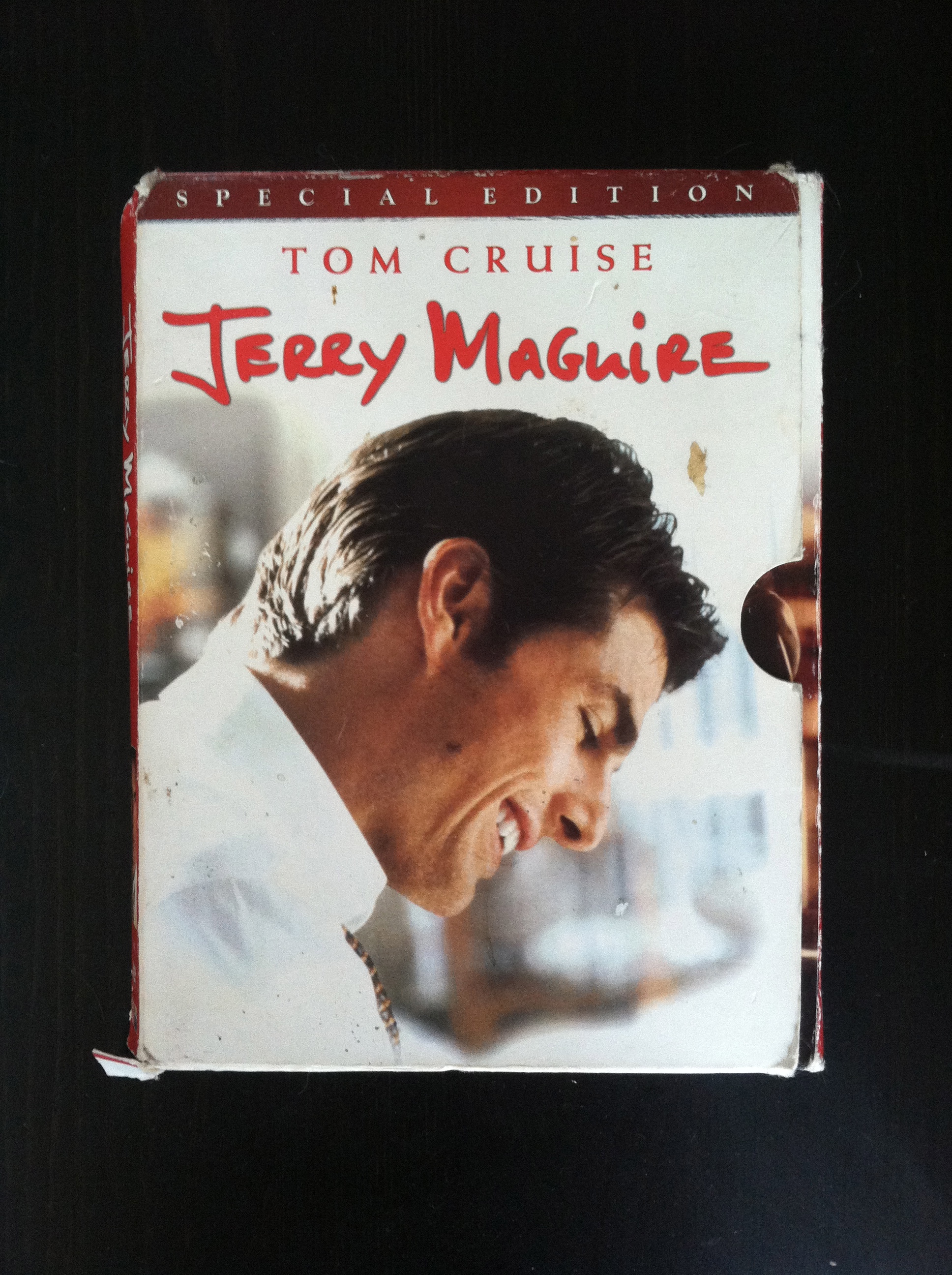
IMG_1877
IMG_1886
IMG_1882

Top 5 Russian Fairy Tales

When I can’t sleep at night, I like to read from this book of Russian Fairy Tales in a Russian accent.

 Russian Fairy Tales

I picked up this book at The Museum of Jurassic Technology, a magical place in Los Angeles that makes no sense, defies all logic and makes the world a better place. The stories in this book usually start with a character who must overcome obstacles involving livestock and produce and end with the character failing or dying. There is something comforting about the predictable futility of their efforts. Below, please find summaries of my Top 5 Russian Fairy Tales:

Top 5 Russian Fairy Tales

The Turnip

Grandfather plants a turnip. The time comes to pick it. He can’t pull it out himself so he asks grandmother to help. She can’t do it so she asks Granddaughter. Granddaughter can’t so she asks a puppy. The puppy can’t do it so he asks a beetle. Then the beetle asks a second beetle. Then the second beetle asks a third beetle. Then a fourth beetle. They all pull and pull, but can’t pull out the turnip. The End.

The Snotty Goat

A merchant had three daughters. He built them a new house and sent them there to have dreams. The first daughter dreams she will marry a merchant’s son. The second daughter dreams she will marry a nobleman. The third daughter dreams she will marry a goat. The merchant was frightened and forbade his third daughter from leaving the house. She snuck out anyway and was captured by a goat. Back at the goat’s place, he had a lot of snot on his face so the third daughter wiped it up for him with a handkerchief and fell in love. Everyone made fun of her for loving the goat, but she didn’t care. Then one day she came home and the goat was dead. The End.

The Old Woman Who Ran Away

An old woman and an old man lament their regrets of not having children. They begin to argue about what their children would or would not have been like. The old man drags the old woman by the braid and hits her face against the stove. The old woman packs a bag and runs away. When she gets really far into the forest, she opens the bag and realizes the old man is inside of it. She promises never to leave home again. The End.

Misery 

Two brothers lived in a village. One was poor and one was rich. The poor brother asks the rich brother for money because his family is starving to death. The rich brother invites him to come back the next day with his family for his birthday feast. At the party, the rich brother forgets to offer his poor brother’s family anything to eat, so they just sit there with empty stomachs and watch all the guests enjoy themselves. The End.

The Stubborn Wife

Once a peasant shaved his beard and told his wife about it. His wife told him he didn’t really shave his beard, he just trimmed it. The husband thrashed his wife and demanded she admit that his beard was shaved or else he would drown her in the river. The wife insisted it was just trimmed, not shaved. The peasant held his wife underwater till she drowned. The End.

Brooklyn’s Biggest Hooker

Originally reported in 2009 by Sydney Parker

“I’m forty years old and I hooked a forty pound fish!” declared John Ruffino, hoisting the giant first prize Brooklyn Fishing Derby trophy over his head. The first annual derby held it’s closing celebration Sunday night at the Brooklyn Alehouse.

JohnRuffino

An enormous striped bass hung by it’s lip from a tree branch at the entrance, marking the spot. The ceremony signified the end of the month long competition to catch the biggest fish anywhere along the East River from Red Hook to Long Island City, Queens.

Catching the big fish was a proud moment for Ruffino. A class room of Orthodox Jews had taken a field trip to the Gantry State Park pier that day and cheered as he reeled in the line for the massive fish. It took him over twenty minutes to pull the bass out of the water.

“When I stuck my hand in to pull out the hook, the fish bit me,” said Ruffino, unwrapping his hand from his beer to show the scar.

Back lit by a stunning view of the Manhattan skyline and flattered by the sparkling East River, Gantry State Park provides the ideal conditions for the fisherman’s reverie. The park was recently transformed from an industrial space into an award winning design. Two gantries, old Long Island Railroad shipping lifts, remind the public of the area’s industrial history.

“I come out here and fish every day after work,” boasted Ruffino, attempting to pull off his sweatshirt over a lit cigarette. “It doesn’t leave a lot of time to meet women.”

Ruffino began fishing when he was a little boy and quickly developed an obsession, leading him to spend extravagant amounts of money on new fishing equipment. He wishes that there was a local tackle shop in Long Island City but doesn’t mind making the trip to the Dream Tackle Shop in Brooklyn, a hangout for fisherman in the know.

Ben Sargent and James Potter, members of the Urban Anglers Association founded the competition almost as a joke to see if any New Yorkers would actually participate. To their surprise, 40 competitors signed up ranging from old-timer fisherman to skinny-jeaned Hipsters all striving to become New York’s “biggest hooker.”

“The fishing community is a tight, discrete network,” said Sargent, adjusting his Katz’s Delicatessen baseball hat. “We wanted to open it up to everyone.”

Sargent is notorious in the culinary community for his seafood chowder recipe featured on Food Network, his surfing club in Rockaway Parkway and his honorable work with I Fish NY, a program that introduces city kids to the world of fishing.

Sargent’s derby awards extended way beyond 1st and last. The awards for Most Jealous Fisherman, Most Time Spent in the Water, and Best Dressed Fisherman were also greeted with applause and laughter from friends and family. The award for Most Absent Fishermen went to Jason Lamb, a young man with a shaggy mop of hair who notoriously left his pole unattended. His prize: A $50 gift certificate to get a haircut.

Russell Dugan, a young shop regular sporting dirty vintage glasses and an unwashed mullet warmed beneath a red trucker hat enjoys Ruffino’s vast fishing knowledge and outlandish personality. Dugan rarely catches anything but appreciates the sport.

“It’s not about the catching, it’s about the fishing.” The Brooklyn Fishing Derby officially advocates a policy of catch and release. In spite of this, Ruffino plans to share his bounty of fish with good friends and neighbors.

Eating fish from the polluted East River is not advised by environmental experts, but fishermen swear by the safe and pleasurable experience of ingesting the fish you caught by way of your own patience and diligence.

Potter is proud of the derby’s popularity with people of all ages and backgrounds. “Fishing is a common language,” says Potter. He can’t wait to see who joins up next year.

His sister Clarissa Potter is happy for her brother’s success but is relieved that he will now be more available to spend time with loved ones. Mr. Potter won the Most Jealous Fisherman Award for his attitude of complete despair when he lost a fish and very vocally condemned his competitor’s big catch.

New York might seem like the last place a fisherman would go to relish in the tranquil art of casting and reeling, but for Micheal Louie, the Long Island City shore is pure paradise.

“When I’m waiting for the fish to come, I clear my head,” says Louie. “Water runs in, problems run out.”

Space Womb

space womb

Original reporting done in 2009 by Sydney Parker. 

Art is gestating in Long Island City’s Space Womb. The new gallery conceived by artist Jongwang Lee features installation art, interpretive dance and music inspired by the spirituality of the female uterus. Mr. Lee envisions his exhibition as a home for embryonic life, “where one can leave material reality behind and return to the Utopian world of the mother’s womb.” He hopes to promote his vision while fostering the growth of developing artists in the community.space womb gallery

“It’s a little weird, but it’s nice to look at,” said Patricia Toranovich, manager of Court Square Diner located across the street.

Diners enjoy cheese Danish and a full view of the gallery’s galactic “Space Womb” sign imposed on a jet-pack black exterior and swathed in tongue-pink swirls extending all the way onto the sidewalk.

“The name is so strange, nobody knows what it is,” said Tina O’Brien, a bartender at The Shannon Pot, an Irish pub a few doors down from the gallery, “everyone is afraid to go in.”

Mr. Lee credits much of the inspiration for his art to his grandmother who was a famous Shaman in Korea.“During my childhood I was deeply impacted by her performance and felt a strong contact with the spiritual world,” says Lee swooping back a mass of long, dark hair.

Upon completion of his studies at prestigious art Universities in Seoul, Korea and Tokyo, Japan, Mr. Lee moved to New York, New York. He missed the familiarity of his birth country, but wanted to be reborn in the culturally and politically free American climate. His womb-themed art has been featured in group and solo shows throughout museums in California, Washington D.C. and New York. In June 2009 he opened his own gallery at 22-48 Jackson Avenue, LIC.

Space Womb’s address has a reputation in the working-class neighborhood as a haunt for eccentric proprietors. The storefront church, Iglesia De Dios that previously occupied the space held raucous Wednesday night prayer meetings much to the displeasure of neighboring businesses.

“They were singing and screaming late at night. I couldn’t stand the noise,” says Kenny Kang a sign constructor at nearby Eden Signs & More. The owner of the church was later committed to an insane asylum and the church sold to current landlord, Gregory Wolkoff.

The businesses bounding 22-48 Jackson Avenue are relieved by the quietness of their new neighbor. Mr. Lee’s unusual gallery provokes more than a few eyebrow raises, but doesn’t disturb the ebb and flow of the hard working Long Island City citizens arriving off the 7 train zooming overhead.

“I hope that my work encourages people to look within themselves and realize the unbelievable power of life and the dormant potential within each of us,” says Lee.

Mr. Lee is pleased with his gallery’s relatively soothing presence and hopes to continue infiltrating the neighborhood with his artistic and spiritual revelations.

“I like the name Space Womb, it’s funny,” says Michael Stein, a dreadlocked, 6’ 5” elevator mechanic taking a cigarette break in front of Colonial Elevator Corporation. “What the hell do they do in there?”